
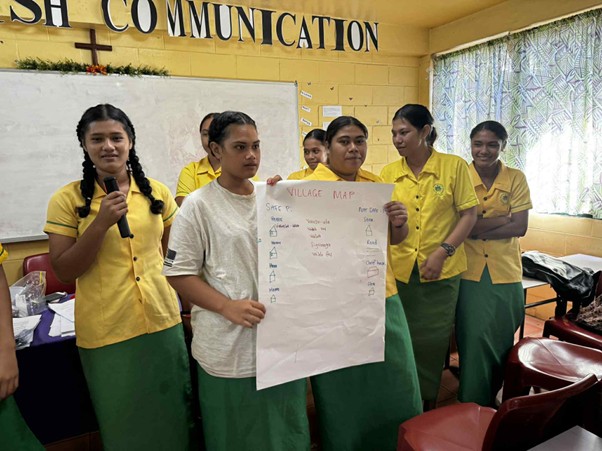
In Samoa, 50 young women who once believed they had little to offer are now finding their voices, their skills, and their place in society. From April to June 2025, the organisation Brown Girl Woke (BGW) implemented the She Builds vocational empowerment programme with support from the Commonwealth of Learning (COL) and funding from New Zealand’s Ministry of Foreign Affairs and Trade (MFAT).
Many of the girls had left school early. Some could not read or write; others had never spoken about their dreams. When they first entered the BGW centre in Apia, many arrived shy, withdrawn, and unsure of themselves. What they discovered over the following eight weeks was more than skills training—it was a safe space to heal, grow, and believe in their own worth.
Workshops on rights, empathy, and trust laid the foundation. Activities like Life Map drawing, mirror affirmations, and the “Wall of Truth” helped participants shed shame and build self-worth. As one participant wrote, “This is the first time someone asked me about my dreams.”
The programme also gave the girls hands-on vocational skills. They learned sewing, hospitality, plumbing, welding, and basic entrepreneurship. For many, producing their first product—a skirt, pillow, or tote bag—was a life-changing moment. “I never thought I could make anything. I always thought my life was just to stay home. Now when I sew, I think maybe I have a gift,” shared a 17-year-old.
By the halfway point, girls who once hid at the back of the room were leading hospitality demonstrations, threading sewing machines with confidence, and proudly introducing themselves as future businesswomen. A strong sense of sisterhood grew among them—laughing together, lifting one another up, and calling each other “sisters.”
The She Builds Boutique, created as a team-run brand, became a powerful outlet for their creativity and identity. Every product carried a story—because as one youth speaker reminded them, “People don’t buy bags. They buy our stories.” The girls went on to produce conference bags, cultural goods, and hospitality services, tying economic opportunity with advocacy.
For many families, this transformation was striking. Daughters once considered “too quiet” or “too shy” were now leading in public events, greeting guests, and explaining the meaning behind their work. As one 19-year-old put it: “I was scared on the first day. I didn’t even want to talk. But now I can say, I have a story. I have something to offer.”
The programme’s outcomes went far beyond expectations: all 50 completed a product or hospitality event, over 20 shared their personal stories aloud, and communities began asking how more daughters could join.
To sustain this change, Brown Girl Woke is now planning a She Builds Fellowship, externships at community events, and rural outreach to extend training to villages beyond Apia. The girls’ journeys continue—but already they have shown what is possible when young women are given a safe space, supportive training, and the belief that they matter.